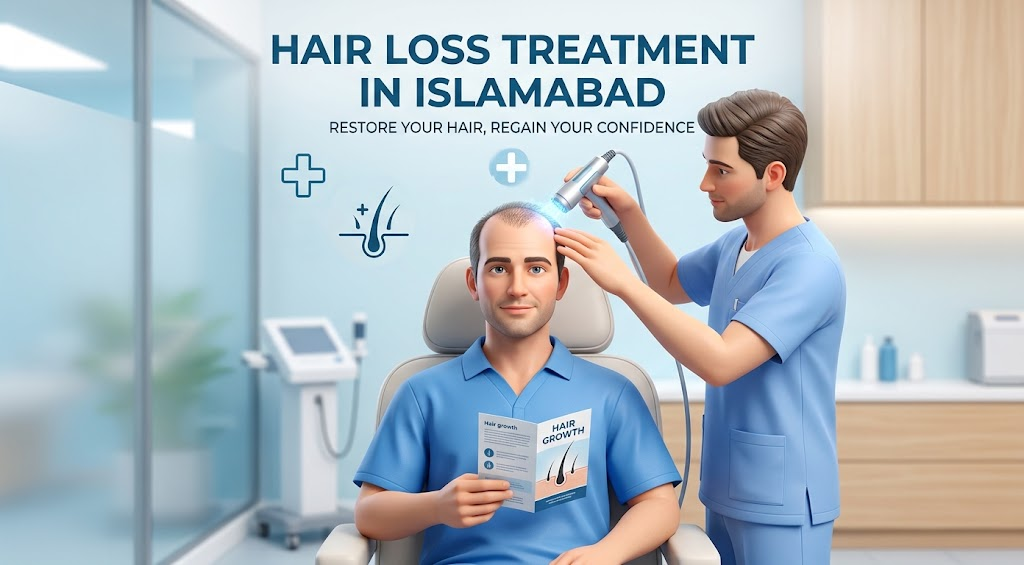
Hair loss can affect appearance, confidence, and everyday comfort. While losing a few strands each day is normal, persistent thinning, widening part lines, receding hairlines, or visible scalp may indicate a problem that deserves professional attention. Modern care focuses on identifying why hair is falling and selecting treatment according to the cause, pattern, age, and condition of the scalp.
For people considering Hair Loss Treatment in Islamabad, the most important step is not choosing a procedure quickly. A proper consultation can help determine whether the problem is temporary shedding, pattern hair loss, nutritional deficiency, hormonal changes, scalp disease, stress-related shedding, or another condition. Once the cause is understood, a suitable treatment plan can be discussed.
Hair Loss Treatment in Islamabad: Understanding the Causes of Hair Loss
Hair loss has many possible causes, and different causes require different approaches. Genetic pattern hair loss is one of the most common reasons for gradual thinning in both men and women. Hormonal changes, certain illnesses, prolonged stress, rapid weight changes, poor nutrition, and some medicines can also influence the hair growth cycle.
Scalp conditions may contribute to itching, inflammation, scaling, or increased shedding. In some cases, temporary shedding occurs several weeks or months after a stressful event, illness, or major change in the body. Because several factors can exist at the same time, a detailed medical history and scalp assessment can be useful before treatment begins.
Why Professional Assessment Matters
A professional assessment helps distinguish between shedding and progressive hair loss. During consultation, a clinician may ask about family history, diet, recent illness, medications, lifestyle, and the duration of symptoms. The scalp and hair density can also be examined to understand the distribution and severity of thinning.
For individuals exploring Hair Loss Treatment in Islamabad, this evaluation is particularly valuable because it helps avoid unnecessary procedures. Depending on the suspected cause, a provider may recommend observation, topical or oral medicines, laboratory testing, scalp care, regenerative approaches, or a surgical option. The treatment should match the diagnosis rather than follow a one-size-fits-all plan.
Common Treatment Options
Treatment varies according to the underlying problem. Medicines may be considered for certain types of pattern hair loss and should be used according to professional guidance because they can have contraindications or side effects. Topical therapies may be recommended to support the growth cycle, while other approaches can focus on improving scalp health.
Some clinics also offer platelet-rich plasma therapy, commonly known as PRP. This approach uses components prepared from the patient’s own blood and is intended to support hair follicles. Evidence and results can vary, so expectations should be discussed before starting sessions. Another option for suitable candidates is a hair transplant, which moves follicles from a donor area to areas with significant thinning.
What to Expect During Consultation
A consultation for Hair Loss Treatment in Islamabad should be an opportunity to discuss goals openly. Patients can explain when the shedding began, which areas are changing, and whether close relatives have experienced similar hair loss. Bringing a list of medicines and relevant medical information can make the discussion more useful.
The clinician may evaluate the hairline, crown, density, donor area, and scalp condition. Photographs or magnified examination may help document the current pattern. If a medical issue is suspected, additional testing may be suggested. A clear plan should explain the proposed treatment, expected timeline, possible risks, maintenance requirements, and alternatives.
Choosing the Right Clinic
Selecting a clinic requires more than comparing advertised prices. People seeking Hair Loss Treatment in Islamabad should consider the qualifications and experience of the treating professional, the cleanliness of the facility, the consultation process, and whether the clinic provides realistic information about outcomes.
It is also useful to ask who will perform each stage of a procedure, what type of follow-up is offered, and how complications are handled. Before-and-after photographs can provide context, but they should not be treated as a guarantee. A trustworthy provider should explain that results differ between patients because hair characteristics, donor supply, age, genetics, and underlying causes vary.
Preparing Before Treatment
Preparation depends on the selected approach. Patients may be advised to provide a complete health history and disclose allergies, medicines, supplements, and previous procedures. If testing is recommended, completing it before treatment can help identify issues that may need attention.
People considering Hair Loss Treatment in Islamabad should also avoid choosing a procedure solely because it is promoted as fast or permanent. Hair biology is gradual, and many treatments require patience. Maintaining realistic expectations can make the process easier and help patients judge progress over an appropriate period.
Recovery and Aftercare
Aftercare differs considerably between medicines, non-surgical procedures, and hair transplantation. A provider should give specific instructions about washing, physical activity, scalp products, sun exposure, and follow-up visits when relevant. Following these instructions can help reduce avoidable irritation and support recovery.
For many people, visible improvement is not immediate. Hair grows through cycles, so treatment results may develop gradually. Regular follow-up can help assess density, shedding, scalp health, and whether the plan needs adjustment. Patients should report unexpected symptoms rather than changing medication or treatment frequency without professional advice.
Understanding Hair Transplantation
Hair transplantation can be considered when stable donor follicles are available and the pattern of loss makes transplantation appropriate. Common techniques include follicular unit extraction and other methods that relocate individual follicular units or strips of tissue, depending on the surgical plan.
When discussing Hair Loss Treatment in Islamabad, it is important to understand that transplantation does not necessarily stop future loss in untreated areas. A careful assessment of donor supply and likely progression is therefore essential. The aim is to create a natural-looking distribution while using donor follicles responsibly.
Costs and Treatment Planning
The cost of hair care can differ widely because treatment depends on diagnosis, technique, number of sessions, medication requirements, and clinic expertise. A low initial price may not represent the total cost if multiple sessions or long-term maintenance are required.
Instead of selecting a provider based only on cost, patients should compare what is included in the treatment plan. Ask whether consultation, follow-up, medicines, testing, and aftercare are included. A transparent estimate can make financial planning easier and reduce misunderstandings later.
Building Healthy Hair Habits
Professional care works best alongside sensible daily habits. A balanced diet that provides adequate protein, vitamins, minerals, and overall nutrition supports normal hair growth. Gentle hair care, appropriate scalp hygiene, avoiding excessive heat, and limiting harsh chemical treatments may also reduce avoidable hair damage.
Stress management and adequate sleep are useful for general wellbeing and may be relevant when shedding is associated with significant stress. However, lifestyle measures should not be presented as a replacement for diagnosis when hair loss is persistent, sudden, patchy, or accompanied by scalp symptoms.
Hair Loss Treatment in Islamabad: Final Thoughts
Effective hair care begins with understanding the cause rather than chasing a solution. Planning helps protect existing hair and guide expectations. For anyone considering Hair Loss Treatment in Islamabad, a qualified consultation can provide a clearer picture of the condition and the options that may be appropriate. Treatment may involve medicines, regenerative procedures, scalp care, or transplantation, depending on individual needs.
The best plan is realistic, personalized, and based on professional assessment. By comparing qualifications, treatment methods, follow-up support, expected timelines, and total costs, patients can make a more informed decision. With appropriate guidance and patience, the goal is to manage hair loss responsibly while protecting scalp health and achieving natural-looking improvement.