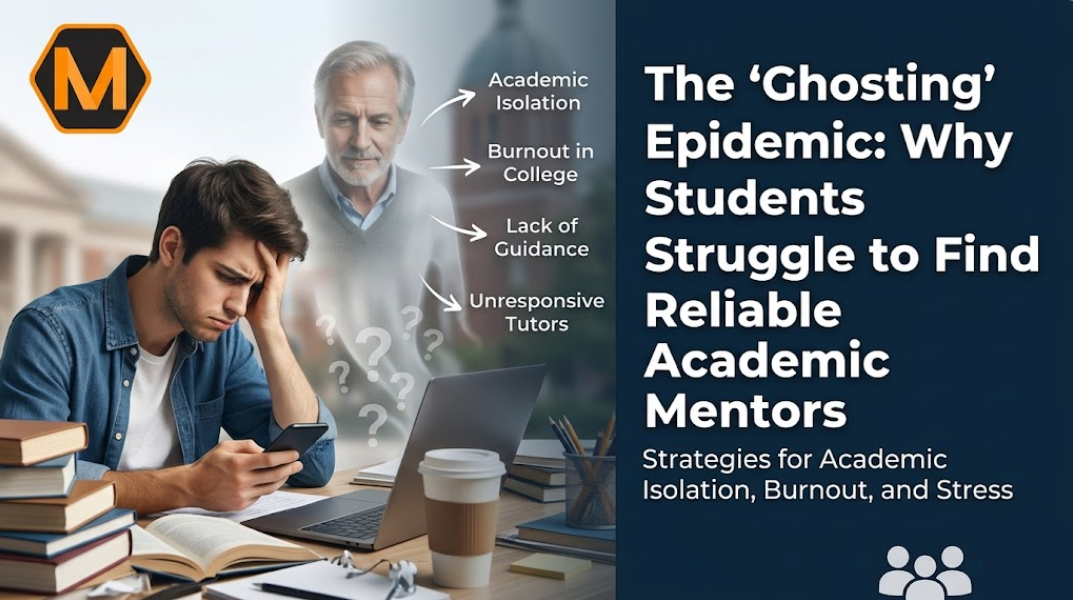
The dream of higher education is often sold as a collaborative journey. We imagine lecture halls filled with inspiring professors and office hours where a seasoned mentor guides us through the complexities of our chosen field. However, in 2026, a much colder reality has set in for many: the “Ghosting” Epidemic. Students are finding themselves increasingly isolated, sending emails into the void and watching deadlines approach while their primary sources of guidance remain silent. This lack of responsiveness isn’t just a minor inconvenience; it’s a systemic failure that threatens the academic success and mental well-being of a generation.
The pressure of the modern semester is relentless, and when a traditional advisor disappears, the search for online assignment help becomes a necessity for survival. This is where myassignmenthelp steps in to fill the void, providing the steady, reliable support that traditional academic institutions are currently failing to provide. When your faculty advisor doesn’t respond for three weeks, having a consistent point of contact ensures that your progress doesn’t stall and your grades don’t suffer due to factors entirely outside of your control. This reliability is the cornerstone of academic resilience in an era where institutional bandwidth is stretched thinner than ever before.
The Breakdown of the Traditional Mentorship Model
Why is this happening now? The primary culprit is a shift in how universities operate. Professors are no longer just teachers; they are researchers, grant-writers, and administrators. The “Publish or Perish” culture has reached a breaking point, leaving faculty members with almost zero bandwidth for one-on-one student interaction. When a professor is managing three research grants and a full teaching load, the “unresponsive tutor” becomes the norm rather than the exception.
This academic isolation creates a dangerous ripple effect. Without a mentor to validate a thesis direction or clarify a complex theory, students often experience a total freeze in productivity. They aren’t lazy; they are stuck. They are navigating a cost of education that is higher than ever before, yet receiving less personalized instruction than their parents did. This creates a massive gap in the ROI of a degree, as students pay premium prices for what essentially feels like a self-taught course. The structural integrity of a degree relies on feedback loops; when those loops break, the entire educational value proposition collapses.
The Financial Cost of Silence
From a financial perspective, ghosting is a disaster. Every week spent waiting for feedback on a dissertation chapter is a week closer to an extra semester of tuition. In the world of finance and stocks, we talk about “opportunity cost.” For a student, the opportunity cost of a ghosting mentor is the salary they aren’t earning because their graduation date keeps sliding further into the future.
For students in professional tracks, the stakes are even higher. Those managing a heavy workload in corporate studies often require business assignment help to maintain their GPA while simultaneously building their portfolios.
The Anatomy of Academic Isolation
To understand why this problem is so persistent, we have to look at the “Mentor-Student Gap” that has widened over the last decade. The following table breaks down the core differences between the expected academic experience and the 2026 reality.
| Feature | The Ideal Academic Model | The 2026 “Ghosting” Reality |
| Response Time | 24–48 Hours | 7–14 Days (or never) |
| Feedback Quality | Detailed, constructive criticism | Generic comments or “See syllabus” |
| Mentorship Goal | Intellectual growth and networking | Basic compliance and grading |
| Financial Risk | Low (Subsidized or stable tuition) | High (Variable interest rates on loans) |
| Emotional Impact | Confidence and clarity | Anxiety and “imposter syndrome” |
Psychological Barriers: Burnout and Academic Anxiety
The mental toll of being “ghosted” by an authority figure is significant. It leads to a specific type of academic anxiety where the student begins to doubt their own competence. “Maybe I’m not getting a reply because my work is so bad it’s not worth a response,” is a common thought among students experiencing academic isolation. This is not just a feeling; it is a psychological phenomenon that actively prevents students from finishing their degrees.
When a student feels ignored, their motivation levels drop. This isn’t because they don’t want to work, but because they lack the “Green Light” from an expert to proceed. This burnout in college isn’t always caused by the amount of work, but by the uncertainty of the work. If you spend 40 hours on a paper only to be told two weeks later that you misunderstood the prompt because your mentor didn’t clarify it, that is a recipe for total exhaustion.
The Role of Professional Support in 2026
As traditional mentorship fades, a new sector has emerged to provide the reliability that students crave. Professional writing consultants and academic assistants are now the “Secret Weapon” for high-achievers. Unlike a busy professor, these professionals are incentivized to be responsive. They provide the structural integrity that a modern degree requires, ensuring that every research paper and case study meets professional standards.
This isn’t about taking the “easy way out.” It is about resource management. If you are paying tens of thousands of dollars for an education, you deserve to have your questions answered. When the system fails to provide a mentor, seeking external academic assistance is a logical, high-value decision that protects your investment in your future. It allows students to maintain their momentum and ensures that their hard work is actually aligned with what is required to pass.
How to Navigate the Gap: A Proactive Strategy
If you find yourself in a situation where your academic mentor has gone missing, you cannot afford to wait and hope for a reply that may never come. You must treat your education like a business.
- Document Your Outreach: Keep a log of every email and follow-up. This is your paper trail if you ever need to appeal a grade or a missed deadline.
- The 72-Hour Rule: If you don’t hear back within 72 hours, move to the next step. Don’t let your schedule be held hostage by someone else’s inbox.
- Pivot to External Resources: If the school won’t help, look for professional academic consultants who specialize in your field.
- Network Outside the Faculty: Connect with alumni or professionals on LinkedIn who have the “high-value skills” you are trying to learn.
- Focus on the ROI: Remember that your degree is an investment. Do whatever is necessary to protect the value of that investment.
The Shift in Global Academic Tones
The way we talk about school is changing. It’s becoming less about “learning for the sake of learning” and more about “strategic career positioning.” This global tone shift reflects a world where the job market is incredibly competitive. Students are under pressure to be perfect from day one. When a mentor disappears, they aren’t just missing a teacher; they are missing a guide who is supposed to help them navigate the transition from student to professional.
This is why “Academic Integrity” is now often discussed alongside “Academic Reliability.” It is one thing for a student to be honest in their work, but it is equally important for the institution to be reliable in its support. Without that reliability, the contract between the student and the university is broken.
Final Thoughts: Taking Back Control
The “Ghosting” Epidemic is a sign that the higher education system needs a major overhaul. Until universities find a way to prioritize student-mentor relationships again, the burden of finding reliable support will fall on the student. By recognizing the limitations of the current system and seeking out professional academic assistance early, you can avoid the traps of academic isolation.
In the end, success isn’t just about what you know; it’s about who you can rely on when things get difficult. Don’t let an unresponsive professor dictate the future of your career. Take control of your academic journey by building a support network that actually shows up when you need them. Your future self—and your bank account—will thank you for it.
Frequently Asked Questions
- What should I do if my faculty advisor stops responding to emails?
Maintain a clear log of all outreach attempts and wait no more than 72 hours before seeking alternative guidance or escalating the matter to department heads.
- How does a lack of mentorship affect my long-term career?
Consistent delays in academic feedback can push back graduation dates, leading to increased tuition costs and a significant loss in potential early-career earnings.
- Is seeking external academic assistance considered a valid strategy?
Yes, treating education as a professional investment means utilizing all available resources to ensure project continuity and maintain high standards when institutional support is unavailable.
- What are the signs of academic burnout caused by isolation?
Common indicators include a freeze in productivity, persistent self-doubt regarding your work’s quality, and high levels of anxiety stemming from a lack of clear direction.
About The Author
Min Seow is a dedicated content strategist at myassignmenthelp, where they focus on bridging the gap between complex academic requirements and student success. With a passion for clear communication and educational equity, Min develops resources that help learners navigate the evolving challenges of modern higher education.