Introduction
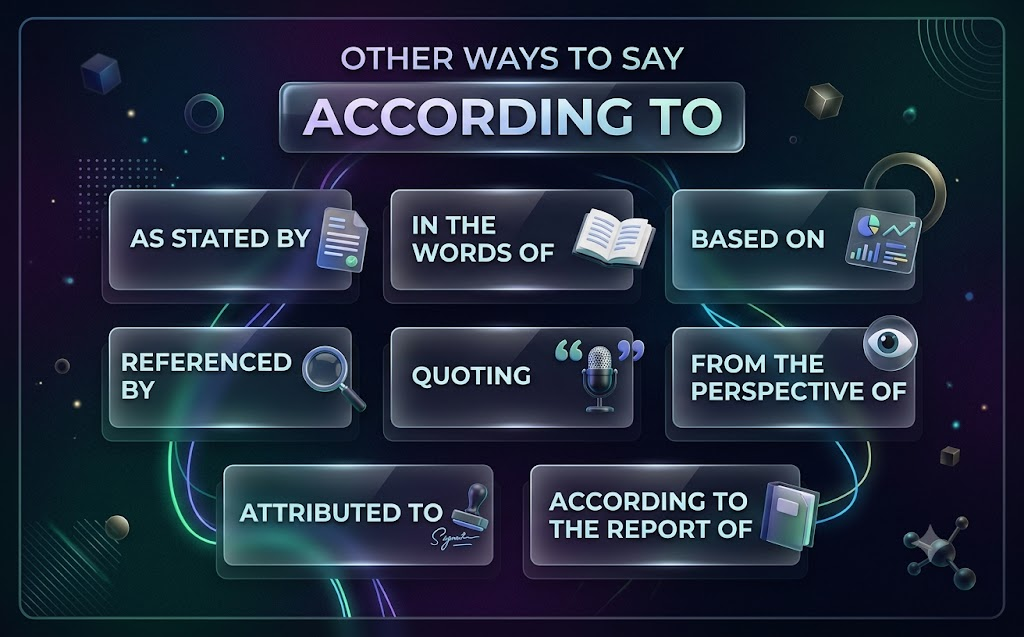
Writing becomes more engaging when you avoid repeating the same phrases. One expression that appears frequently in essays, articles, reports, and everyday writing is Other Ways To Say According To. While “according to” is correct and widely accepted, using it repeatedly can make your content sound repetitive and less professional. Learning different alternatives helps improve style, readability, and vocabulary.
Whether you are a student, blogger, journalist, or business writer, knowing suitable replacements can make your work stronger. Different situations require different wording, and choosing the right phrase helps communicate ideas more naturally. This guide explains useful alternatives, when to use them, and examples that make every option easy to understand.
Why Use Alternatives to “According To”
Using the same phrase over and over can make readers lose interest. Replacing it with appropriate alternatives creates smoother sentences and demonstrates a stronger command of language. It also allows writers to match the tone of formal, academic, conversational, or professional writing.
Expanding your vocabulary improves communication and gives your writing greater flexibility. Instead of relying on a single expression, you can choose words that best fit your audience and purpose. This simple habit makes your content more polished and enjoyable to read.
Common Other Ways To Say According To
Many expressions can replace “according to” without changing the meaning. Some of the most useful include “as stated by,” “based on,” “as reported by,” “in the opinion of,” “as mentioned by,” “per,” “as noted by,” and “in the words of.”
Each alternative has a slightly different tone. Some are better suited for academic papers, while others fit business documents or casual conversations. Understanding these differences helps you select the most natural option every time you write.
Use “As Stated By”
“As stated by” is a formal alternative that works well in reports, research papers, and professional documents. It clearly identifies the source of information while maintaining a polished tone. This phrase is especially useful when quoting official statements or published materials.
For example, instead of writing, “According to the report, sales increased,” you could write, “As stated by the report, sales increased.” Both sentences share the same meaning, but the second sounds slightly more formal and refined.
Use “Based On”
“Based on” works well when information comes from evidence, research, or collected data. It emphasizes that a conclusion or statement relies on supporting facts rather than personal opinion. This makes it popular in scientific, academic, and business writing.
For instance, “Based on recent surveys, customer satisfaction has improved” sounds natural and informative. This expression is ideal when discussing statistics, experiments, or analytical findings that support your argument.
Use “As Reported By”
When referencing news articles, media outlets, or journalists, “as reported by” is an excellent replacement. It tells readers that the information originated from a published report rather than your own observations. This phrase adds credibility when citing current events.
An example is, “As reported by local newspapers, the event attracted thousands of visitors.” This wording clearly identifies the source while maintaining a professional and objective tone throughout the sentence.
Use “In the Opinion Of”
Sometimes information reflects personal beliefs rather than proven facts. In those situations, “in the opinion of” accurately signals that someone is expressing a viewpoint. This phrase is common in reviews, interviews, and opinion pieces.
For example, “In the opinion of many educators, reading daily improves vocabulary.” This wording makes it clear that the statement represents a perspective instead of an established fact, helping readers interpret the information correctly.
Use “As Mentioned By”
“As mentioned by” is useful when referring to comments made during conversations, presentations, books, or articles. It connects your statement to someone else’s earlier remarks without sounding repetitive. The phrase feels both natural and respectful.
Consider the sentence, “As mentioned by the project manager, the deadline remains unchanged.” This version flows smoothly while giving proper credit to the original speaker or source of the information.
Use “Per”
The word “per” is short, direct, and common in business communication. Although less formal than some alternatives, it is widely accepted in emails, company documents, and workplace conversations. It efficiently introduces information from another source.
For example, “Per company policy, employees must complete training annually.” This concise wording saves space while still clearly indicating that the information comes from an official guideline or instruction.
Use “As Noted By”
“As noted by” works well when highlighting important observations or comments from experts, researchers, or authors. It signals that someone has already pointed out a significant detail, making it valuable in academic and analytical writing.
A sentence like “As noted by the researcher, climate patterns continue to change” sounds authoritative and informative. This phrase encourages readers to recognize the importance of the cited observation.
Use “In the Words Of”
When quoting someone directly or referring to a memorable statement, “in the words of” creates a more engaging introduction. It draws attention to the speaker’s exact expression and often adds emotional or rhetorical impact.
For instance, “In the words of the coach, teamwork creates lasting success.” This wording highlights the original speaker while making the quotation feel more meaningful and memorable to readers.
Choosing the Right Alternative
Not every replacement fits every situation. Academic writing usually benefits from phrases like “as stated by,” “based on,” or “as noted by.” Business communication often favors concise options such as “per” or “based on.” Casual writing may sound more natural with “as mentioned by.”
Before selecting an alternative, consider your audience, purpose, and writing style. Choosing the appropriate expression improves clarity and ensures your message sounds natural rather than forced or overly complicated.
Mistakes to Avoid
One common mistake is replacing “according to” with an expression that changes the intended meaning. For example, using “in the opinion of” when discussing factual research may incorrectly suggest that the information is only someone’s belief rather than evidence.
Another mistake is overusing one alternative after replacing another. Variety improves readability, but consistency and accuracy remain important. Always ensure the replacement matches the context and preserves the original meaning of your sentence.
Practical Examples
Instead of writing, “According to the teacher, practice improves results,” you can write, “As stated by the teacher, practice improves results.” Another option is, “Based on the teacher’s experience, practice improves results.”
Similarly, “According to health experts, drinking water supports good health” becomes “As noted by health experts, drinking water supports good health.” These small changes make writing sound more polished while maintaining the same message.
Tips for Better Writing
Read professional articles, books, and journals to notice how experienced writers vary their wording. Keep a list of useful alternatives nearby while writing until they become part of your natural vocabulary. Regular practice strengthens both confidence and writing quality.
Editing is equally important. After completing a draft, search for repeated phrases and replace them where appropriate. This simple revision technique creates smoother sentences and helps your work sound fresh, engaging, and professional.
Conclusion
Learning Other Ways To Say According To is a simple yet valuable way to improve your writing. By choosing alternatives like “as stated by,” “based on,” “as reported by,” “in the opinion of,” “as mentioned by,” “per,” “as noted by,” and “in the words of,” you can create more interesting and effective content.
The best replacement depends on your audience and purpose. Practice using different expressions, review your work carefully, and focus on clarity. With time, these alternatives will become natural, allowing you to write with greater confidence, variety, and professionalism in every situation.